In this guide
- 1.Why Florida attics are different
- 2.What R-value do you need in Florida?
- 3.R-30 vs R-38
- 4.Insulation materials compared
- 5.Air sealing & ventilation
- 6.Moisture, mold & humidity
- 7.When to remove old insulation
- 8.Radiant barriers
- 9.How much it costs
- 10.Energy savings & payback
- 11.Rebates & incentives
- 12.How contractors price the job
- 13.Common mistakes to avoid
- 14.FAQ
The short answer
In Florida, attics should reach R-38. Depending on the material that's roughly 13–16″ of blown fiberglass, ~11″ of cellulose, or ~6″ of closed-cell spray foam — the exact depth depends on the specific product. Most homes only need a top-off, which typically runs $1,400–$3,000 and pays back in a few years through lower cooling bills. Which material is right depends on your attic, budget, and goals — the best way to know your number is a free quote or inspection.
1. Why Florida attics are different
Insulation advice written for the rest of the country doesn't translate to Florida. In most of the U.S., insulation is about keeping heat in during winter. In Florida, it's almost entirely about keeping radiant attic heat out during a cooling season that runs most of the year.
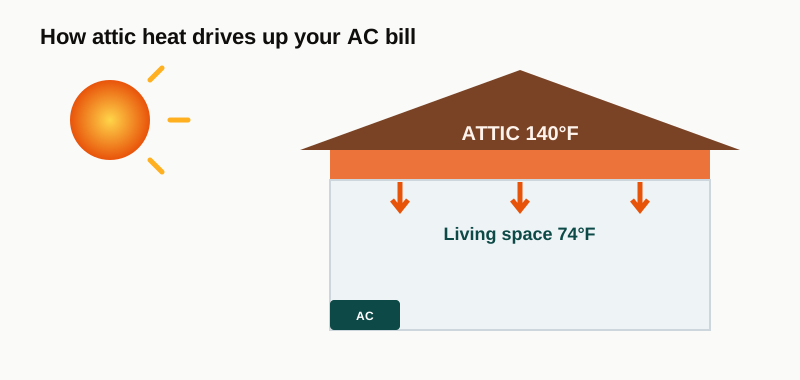
On a summer afternoon, a Florida attic commonly reaches 130–150°F. That superheated air sits directly above your ceilings, and without enough insulation between it and your living space, the heat radiates down and your air conditioner never catches up. Cooling is the single largest line item on a Florida energy bill, and an under-insulated attic is the biggest leak.
That's why attic insulation is consistently the highest-return energy upgrade for a Florida home — bigger than new windows, and far cheaper.
2. What R-value do you need in Florida?
R-value measures resistance to heat flow — higher is better. The U.S. Department of Energy places Florida in climate zones 1–2 and recommends attic insulation of R-38, which is also the modern Florida standard.
The problem: most Florida homes were built to older, lower standards.
- Before 1980: often R-11 to R-13 — a third of today's standard.
- 1980–2000: typically around R-19.
- 2000–2010: commonly R-25 to R-30.
- After 2010: closer to R-30, still short of R-38.
How deep is R-38?
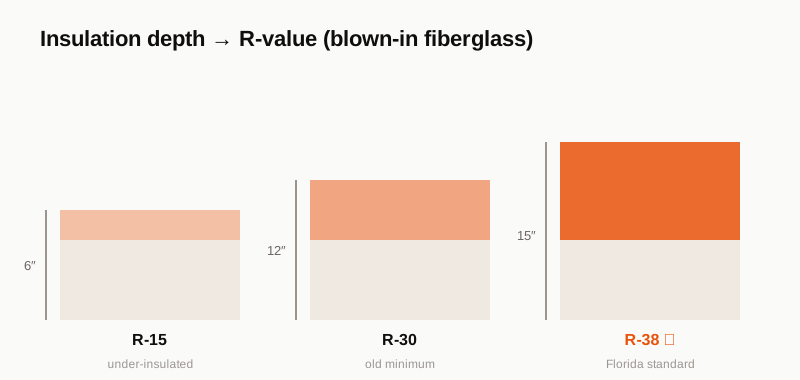
There's no single answer — depth depends on the material, because each has a different R-value per inch (and it varies by product, so the manufacturer's coverage chart is the real spec):
- Blown fiberglass (~R-2.2–2.7/in): about 13–16″ for R-38.
- Blown cellulose (~R-3.2–3.8/in): about 10–12″ — denser, less depth.
- Open-cell spray foam (~R-3.6/in): about 10–11″.
- Closed-cell spray foam (~R-6–7/in): about 5.5–6.5″ — highest R per inch.
Not sure what you have? Use the Depth → R-Value calculator (it lets you pick your material) to estimate your current R-value and how much to add.
See your home's recommended R-value and price instantly.
Get My Free Quote →3. R-30 vs R-38: which should you choose?
This is the most common decision Florida homeowners face. R-30 is an older minimum; R-38 is the current recommended standard. In blown-in fiberglass, R-30 is roughly 12″ and R-38 roughly 13–16″ — only a few extra inches (in cellulose or spray foam both targets are shallower). Either way, going from R-30 to R-38 is a small amount of extra material.
Because the crew, setup, and travel are already paid for, the marginal cost to go from R-30 to R-38 is small — you're mostly paying for a few more bags. But that extra resistance keeps working every cooling season, so for nearly every Central Florida home, R-38 is the better long-term value.
Compare them side by side for your home with the R-30 vs R-38 calculator.
4. Insulation materials compared
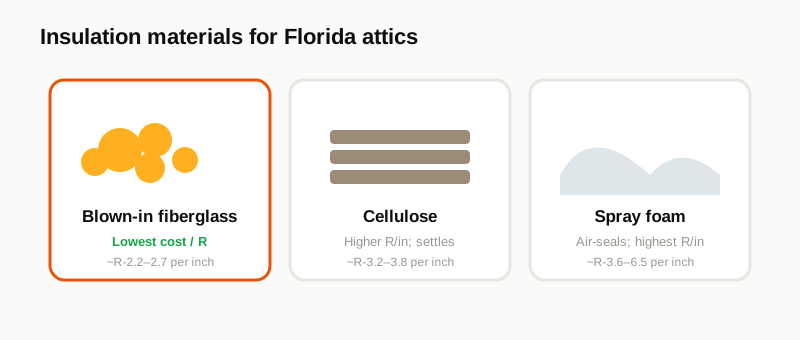
There's no single “best” insulation — each material trades off cost, R-value per inch, air-sealing ability, and how it handles Florida's humidity. Here's an honest comparison for an attic:
Blown fiberglass (~R-2.2–2.7/inch)
Loose fiberglass blown to an even depth across the attic floor. Affordable, non-combustible, doesn't absorb water, and installs in hours. Its lower R-per-inch means it needs more depth to hit R-38, and it can lose some performance if it's disturbed or wind-washed near the eaves. A strong, budget-friendly default for many Florida attics.
Blown cellulose (~R-3.2–3.8/inch)
Recycled paper treated with fire retardant. Higher R-per-inch than fiberglass and excellent at filling gaps and odd cavities, so it reaches R-38 at less depth. Trade-offs: it's heavier, settles roughly 10–20% over time (good installers over-fill to account for it), and can absorb and hold moisture — a real consideration in humid Florida attics.
Fiberglass batts (~R-3.1–3.4/inch)
Pre-cut rolls. Inexpensive and DIY-friendly, but gaps, compression, and cutting around joists and wiring cut real-world performance on an attic floor. Generally better suited to walls than attics.
Open-cell spray foam (~R-3.6/inch)
Sprayed onto the underside of the roof deck to create a sealed, conditioned attic. It air-seals as it insulates and is vapor-open. Costs considerably more than loose-fill and needs a proper moisture strategy.
Closed-cell spray foam (~R-6–7/inch)
The highest R-per-inch option — it air-seals, adds structural rigidity, and acts as a vapor barrier, reaching R-38 in the least space. It's also the most expensive and requires an on-site assessment. Best where space is tight or a fully sealed/conditioned attic (or attic HVAC) is the goal.
5. Air sealing & ventilation
Insulation slows heat flow; air sealing stops air leaks. The two work together. Before adding insulation, gaps around top plates, recessed lights, wiring and plumbing penetrations, and the attic hatch should be sealed — otherwise conditioned air escapes and hot, humid attic air pours in. A quality Florida attic job includes air sealing at these points.
Attic ventilation (soffit + ridge vents) lets the vented attic breathe, keeping it closer to outdoor temperature and helping manage moisture. Insulation should never block soffit vents — baffles keep the airflow path open.
6. Moisture, mold & humidity
Florida's humidity makes moisture management essential. Warm, moist air meeting cooler surfaces can condense, and a damp attic is where mold starts. The defenses are good air sealing (less humid air entering the attic), proper ventilation, and choosing insulation that suits the space: fiberglass doesn't absorb water, cellulose can hold moisture (so it needs a dry, well-ventilated attic), and closed-cell foam doubles as a vapor barrier.
If your attic already has signs of moisture, staining, or a musty smell, that should be addressed before or during the insulation work — and it's a sign the old insulation may need to come out.
7. When to remove old insulation
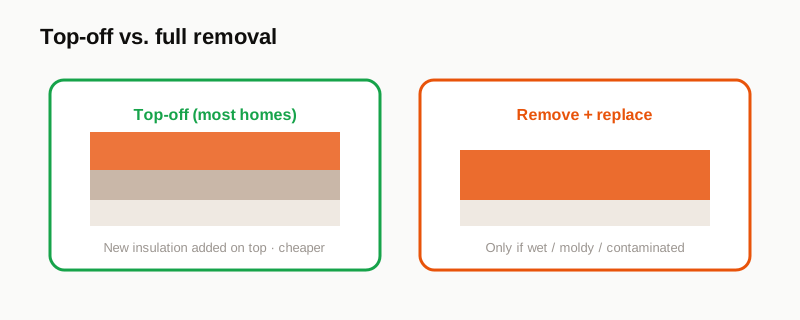
Most upgrades are a top-off — new insulation is blown directly over the existing layer to reach R-38. You do not need to remove insulation just because it's old.
Removal is warranted when the existing insulation is:
- Wet or water-damaged (from a roof leak or condensation)
- Moldy or musty
- Rodent-contaminated (droppings, nesting, odor)
- Compressed, degraded, or full of construction debris
Full removal-and-replace costs more (it's the high end of most estimates) because of the labor and disposal. See the cost calculator — the high end of your range reflects a removal scenario.
8. Radiant barriers
A radiant barrier is a reflective foil that reduces radiant heat transfer from the roof deck. In Florida it can help as a complement to insulation — but it is not a substitute for reaching R-38. If your attic is under-insulated, adding insulation comes first; a radiant barrier is a secondary enhancement.
9. How much does attic insulation cost in Florida?
For a typical Central Florida home, bringing the attic to R-38 with blown-in fiberglass runs roughly $1,400–$3,000. The main drivers are attic square footage, how much usable insulation is already there (a top-off is cheaper than starting from bare), and whether old material must be removed.
Get a size-specific number with the Attic Insulation Cost Calculator, or see local pricing on the cost-by-city page.
10. Energy savings & payback
Because attic insulation directly reduces cooling load — the biggest part of a Florida bill — the savings are real and recurring. Most homes recover a meaningful share of the project cost every year, and a blown-in R-38 upgrade typically pays for itself in about 2–5 years, then keeps saving for the life of the insulation.
Estimate your own numbers with the Savings & Payback calculator.
11. Rebates & incentives
Attic insulation can qualify for federal energy-efficiency tax credits and, at times, local utility rebates. Programs change year to year, so confirm current eligibility with your utility and a tax professional. A properly documented R-38 upgrade is the kind of measure these programs are designed to reward.
12. How contractors actually price the job
Behind every quote are a few simple inputs. Understanding them helps you compare bids fairly:
- Attic square footage — the footprint to cover (roughly your living area divided by the number of stories).
- Target R-value — R-38 for Florida, which sets the depth and material volume.
- Existing insulation — a top-off needs less material than a bare attic.
- Removal — labor + disposal if old material has to come out.
- Air sealing & access — sealing penetrations and any tight-access surcharge.
Florida Attics prices exactly on these inputs — which is why you can get an accurate instant online quote without an in-home sales visit.
13. Common mistakes to avoid
- Stopping at R-30. The upgrade to R-38 is cheap once the crew is on site and pays back for years.
- Insulating without air sealing. Leaky penetrations undo much of the benefit.
- Blocking soffit vents. Kills attic ventilation and invites moisture problems.
- Removing good insulation needlessly. Dry, intact insulation should be topped off, not thrown away.
- Defaulting to spray foam. It's expensive overkill for most vented Florida attics.
Frequently asked questions
What R-value should attic insulation be in Florida?
R-38 is the recommended standard for Florida attics. That's roughly 13–16 inches of blown fiberglass, about 11 inches of cellulose, or about 6 inches of closed-cell spray foam — the exact depth depends on the material and product. Older Florida homes were commonly built to R-19 or less, so most upgrades involve topping off to R-38.
How much does attic insulation cost in Florida?
Most Florida homeowners pay roughly $1,400–$3,000 to bring an attic to R-38, depending on attic size, existing insulation, the material chosen, and whether removal is needed. Spray foam costs more than loose-fill.
Is blown-in fiberglass or spray foam better in Florida?
It depends on your goals. Loose-fill (fiberglass or cellulose) usually offers the best cost per R-value for a standard vented attic. Spray foam costs more but air-seals and can create a conditioned attic — worth it when you have attic HVAC, tight space, or want a sealed roof deck. The best choice for your home is confirmed at a free inspection.
Do I need to remove my old attic insulation?
Not usually. If the existing insulation is dry and intact, new insulation is added on top. Removal is only needed when it's wet, moldy, rodent-contaminated, or has failed.
How hot does a Florida attic get?
Florida attics routinely reach 130–150°F in summer. That radiant heat drives down into your living space through the ceiling, which is why attic insulation is the highest-impact energy upgrade in Florida.
How long does attic insulation last?
Blown-in fiberglass lasts decades and doesn't settle significantly when installed to the correct depth. It only needs replacement if it gets wet or contaminated.
Ready for your exact number?
Get a personalized Florida Attics quote for your real address — price, R-value, and savings — in under 60 seconds.
Get My Instant Quote →