In this guide
The short answer
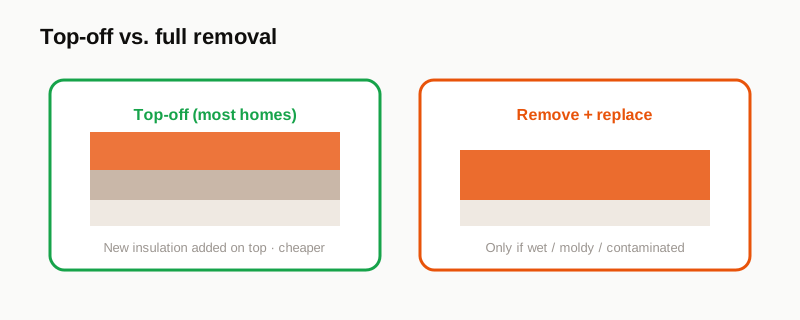
Most attics don't need removal — if the existing insulation is dry and intact, new insulation is added on top (a top-off). Remove old insulation only when it's wet, moldy, rodent-contaminated, or failed. Removal adds labor and disposal cost, which is why a full removal-and-replace sits at the high end of most estimates.
When removal is actually needed
Removal is warranted when the existing insulation is compromised:
- Water-damaged — from a roof leak, flashing failure, or condensation.
- Moldy or musty — visible growth or odor.
- Rodent-contaminated — droppings, nesting, or urine odor (a health issue, not just a smell).
- Failed or full of debris — badly compressed, degraded, or mixed with construction debris.
When you should NOT remove it
If your insulation is simply old but dry and intact, you don't need to remove it. New insulation is blown right on top to reach R-38 — cheaper, faster, and just as effective. Removing good insulation needlessly is one of the most common ways homeowners overpay.
How removal works
A crew uses a commercial insulation vacuum with long hoses to pull the old material into sealed bags at the truck, minimizing dust inside the home. Contaminated material is disposed of properly. The attic is then cleaned and prepped, air-sealed at penetrations, and re-insulated to R-38.
What removal costs
Removal adds labor and disposal on top of the new insulation, so a full removal-and-replace costs more than a top-off. Estimate both scenarios for your home with the Removal Cost Calculator.
See your home's exact numbers — price, R-value, and savings — with a free Florida Attics quote in under 60 seconds. No salesperson, no obligation.
Get My Free Quote →What should happen after removal
Removal is only step one. A proper job then air-seals the attic (top plates, penetrations, the hatch) and installs fresh insulation to R-38 — plus addresses the moisture or pest source that damaged the old insulation in the first place, so the problem doesn't return.
Frequently asked questions
Do I need to remove old attic insulation before adding new?
Usually no. If the existing insulation is dry and intact, new insulation is blown on top. Remove only if it's wet, moldy, rodent-contaminated, or failed.
How much does it cost to remove attic insulation in Florida?
A full removal-and-replace to R-38 costs more than a top-off because of the added labor and disposal. Use the Removal Cost Calculator for an estimate of both paths.
Is old attic insulation dangerous to remove?
Rodent-contaminated or moldy insulation is a health hazard and should be removed by pros with proper equipment and disposal. Very old homes can also contain hazardous materials that require special handling.
How long does insulation removal take?
Most removals are completed in a few hours to most of a day depending on attic size and access, then re-insulation follows.
Ready for your exact number?
Get a personalized Florida Attics quote for your real address — price, R-value, and savings — in under 60 seconds.
Get My Instant Quote →