In this guide
The short answer
Blown-in fiberglass is loose fiberglass blown to an even depth across the attic floor. At ~R-2.2–2.7 per inch, reaching R-38 takes about 13–16 inches. It's affordable, non-combustible, doesn't absorb water, and installs in hours — the most cost-effective way to reach R-38 for most vented Florida attics, though cellulose and spray foam are better in specific cases.
What blown-in fiberglass is
Blown-in (loose-fill) fiberglass is spun glass fiber installed with a blowing machine that fluffs it and distributes it evenly over the attic floor, filling gaps around joists and framing that batts leave behind. It's the most common attic insulation in Florida.
R-value and depth
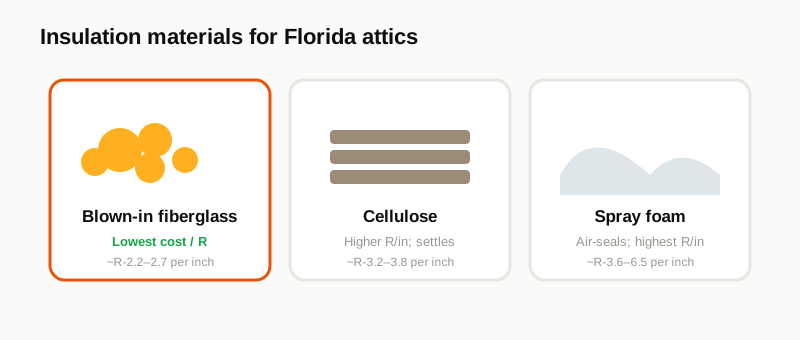
Blown fiberglass delivers roughly R-2.2–2.7 per inch (varies by product). To reach the R-38 Florida standard you need about 13–16 inches of settled depth. Use the R-Value Calculator to convert depth to R-value for any material.
Coverage and bags
Fiberglass is sold and installed by the bag, with coverage of roughly 25–40 sq ft per bag at full R-38 depth depending on the product (the exact figure is on every bag's chart). A typical 2,000 sq ft Florida home needs roughly 40–70 bags — estimate yours with the Blown-In Insulation Calculator.
Pros, cons, and alternatives
Objectively, here's where blown fiberglass fits:
- Strengths: low cost per R-value, non-combustible, doesn't absorb water (an advantage in humid Florida), fast install, fills gaps well.
- Limitations: lower R-per-inch means more depth; can be disturbed or wind-washed near the eaves if baffles/dams aren't used.
- Cellulose offers higher R-per-inch and great gap-filling, but is heavier, settles ~10–20%, and can hold moisture.
- Spray foam air-seals and reaches R-38 in less space, but costs several times more — best when you want a conditioned attic.
Moisture in Florida attics
Fiberglass doesn't absorb water, which helps in Florida's humidity, but moisture management still matters. Pair insulation with air sealing and proper attic ventilation, and never block soffit vents. See the main insulation guide for the full moisture picture.
What it costs
A blown fiberglass attic upgrade to R-38 typically runs $1,400–$3,000 installed — get your exact range in the cost calculator.
See your home's exact numbers — price, R-value, and savings — with a free Florida Attics quote in under 60 seconds. No salesperson, no obligation.
Get My Free Quote →Frequently asked questions
Is blown-in fiberglass good for Florida attics?
Yes — it's the most cost-effective way to reach R-38 for a standard vented attic, it's non-combustible, and it doesn't absorb water, which is helpful in Florida's humidity.
Does blown-in fiberglass settle?
Properly installed to the correct depth, blown fiberglass settles very little. Cellulose settles more (10–20%), which installers account for by over-filling.
How many bags of blown-in fiberglass do I need?
Roughly 40–70 bags for a typical 2,000 sq ft Florida home to reach R-38, depending on attic size and existing insulation. Use the Blown-In Insulation Calculator for your estimate.
Blown-in fiberglass vs cellulose — which is better?
Both are good, cost-effective options. Fiberglass resists moisture and won't settle much; cellulose has a higher R-per-inch and fills gaps well but is heavier and can hold moisture. In humid Florida, fiberglass is often preferred, but the best choice depends on your attic.
Ready for your exact number?
Get a personalized Florida Attics quote for your real address — price, R-value, and savings — in under 60 seconds.
Get My Instant Quote →